
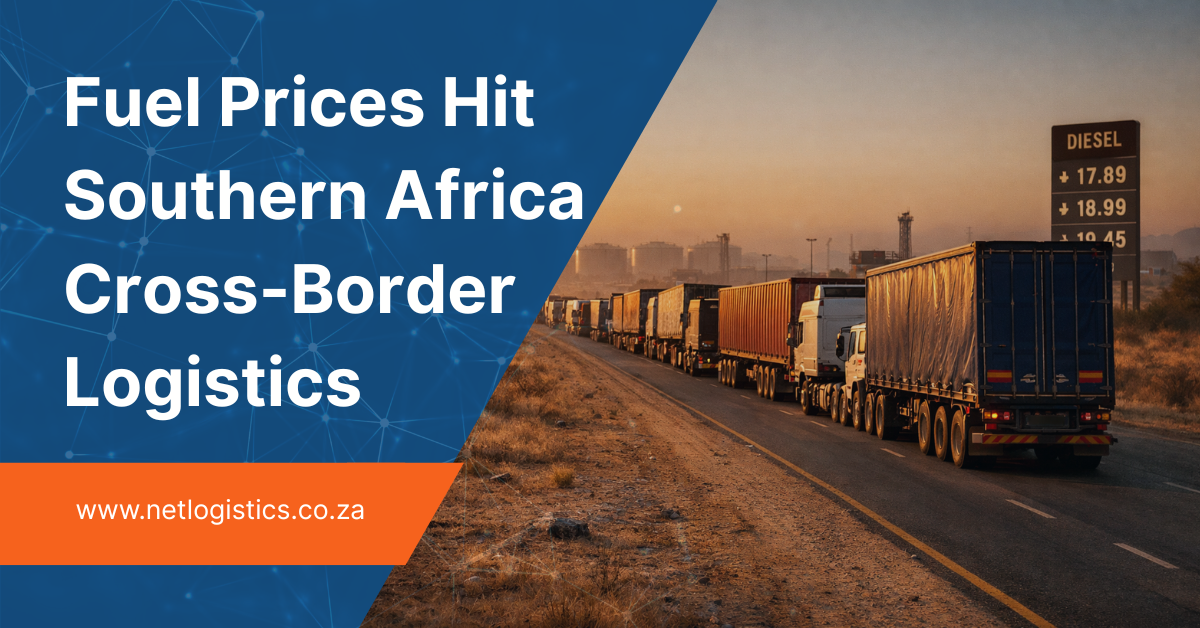
A political unrest thousands of kilometres away is already affecting the cost and movement of goods across Southern Africa.
Escalating conflict in the Middle East has disrupted global oil markets and pushed fuel prices sharply higher. Because diesel is one of the largest cost components in road transport, these increases are now affecting cross border logistics in Southern Africa, particularly along major trade routes between South Africa, Zimbabwe and Zambia.
For businesses that rely on cross-border freight to move goods, the effects are already visible: rising diesel prices, pressure on transport corridors and operational changes at border crossings.
Understanding what is happening — and how it could affect your shipments — is essential for planning imports and managing supply chains over the coming months.
Why the Unrest in the Middle East Is Affecting Logistics
The Middle East plays a critical role in global oil production and distribution. When conflict disrupts production or threatens key shipping routes, global energy markets react quickly.
Oil prices typically rise as supply becomes uncertain and markets anticipate potential shortages.
When oil prices increase, diesel prices rise shortly afterwards. Because trucks depend entirely on diesel to move cargo across long distances, higher fuel prices immediately increase transport costs.
This is why changes in global oil markets translate directly into higher fuel prices logistics costs.
For businesses importing goods across borders, these cost increases can affect transport pricing, freight planning and delivery schedules.
Diesel Prices Are Already Rising Along Major Freight Routes
The impact of rising fuel costs is already visible along some of the region’s most important transport corridors.
Musina, one of the main logistics hubs used by trucks moving cargo into Zimbabwe and further north into Zambia, has seen significant diesel price increases at several suppliers.
In a short period of time, diesel prices at some locations have increased by more than four rand per litre.
Zimbabwe has also seen diesel prices increase, while pricing in Botswana and Zambia currently remains somewhat lower. Because of these differences, transport companies are adjusting where trucks refuel along long-distance routes.
For businesses moving goods across the region, this means transport providers may change fuelling strategies and routing decisions depending on diesel pricing and availability.
Fuel Conditions Are Different Across Southern Africa
Fuel pricing and supply are not identical across the region. Some countries currently report stable supply conditions, while others have already experienced noticeable price increases.
This variation means that transport routes can become more or less efficient depending on fuel pricing in each country.
For example, a route that was cost-effective a few weeks ago may suddenly become more expensive if diesel prices rise significantly along that corridor.
Companies involved in cross border logistics Southern Africa therefore need to continuously monitor conditions across multiple countries when planning shipments.
How Rising Fuel Costs Affect Freight Pricing
While fuel prices are increasing rapidly across the region, it is important to understand how this affects transport costs.
Freight rates themselves are not necessarily changing as a result of the current situation. At NET Logistics, our core freight pricing and service rates remain stable.
However, diesel is a major operating cost in long-distance road transport, particularly for cross-border trucking. When fuel prices increase sharply, the variable fuel component of transport operations is affected.
For this reason, fuel fluctuations are typically managed through fuel surcharges, which adjust in response to changes in diesel pricing.
This approach allows freight rates to remain stable while ensuring that sudden fuel price movements — such as those currently being experienced — can be accounted for fairly and transparently.
In the current environment, the war in the Middle East has triggered a global fuel shock that is already pushing diesel prices higher across Southern Africa. As these fuel costs move, the fuel surcharge component of transport may need to adjust accordingly.
NET Logistics continues to monitor fuel markets and corridor conditions closely in order to manage these changes responsibly and minimise the impact on our clients wherever possible.
Border Processes Are Also Changing
At the same time that fuel prices are rising, some border procedures are also evolving.
Zimbabwe has recently introduced changes to the way customs duties are paid for imported goods.
Previously, clearing agents could deposit funds into pre-payment accounts and draw from those balances once customs declarations were processed.
Under the updated system, duties are now paid only after customs authorities complete their assessment of the declaration.
This change affects the timing of payment, not the customs process itself. However, it means that importers must ensure that payments can be made quickly once customs assessments are issued.
For businesses involved in transport to Zimbabwe, delays in payment confirmation could slow the release of cargo at the border.
Border Delays Can Increase When Systems Change
Operational adjustments and system changes can also contribute to congestion at certain border crossings.
When documentation processing slows or payment systems change, truck queues can form while cargo waits to be cleared.
At major freight crossings such as Kazungula, which connects Botswana and Zambia, delays can affect hundreds of trucks when processing slows.
For businesses moving goods across the region, these delays can extend delivery timelines and affect supply chain planning.
This is one reason border delays across Southern Africa remain a common challenge for cross-border trade.
What Businesses Moving Goods Across Borders Should Consider
For companies importing goods across Southern Africa, the current environment highlights the importance of proactive planning.
Several practical steps can help reduce disruption.
Monitor freight conditions closely
Fuel price volatility can affect transport costs and route planning.
Plan shipments with flexibility
Allowing additional time for cross-border transport can help absorb delays caused by congestion or system changes.
Coordinate closely with clearing agents
Ensuring customs documentation and payment processes are ready can prevent unnecessary delays.
Work with experienced transport partners
Companies that regularly operate across regional corridors are better equipped to respond quickly when conditions change.
Moving Goods Across Southern Africa in a Volatile Environment
Events in global energy markets can have immediate consequences for regional logistics networks.
The current conflict in the Middle East has triggered a fuel shock that is already influencing transport costs and operations across Southern Africa.
For businesses that depend on cross-border freight, staying informed about fuel pricing, border conditions and customs procedures is essential.
Companies operating within cross border logistics in Southern Africa must constantly adapt to changing market conditions in order to keep supply chains moving efficiently.
With careful planning and the right logistics partners, businesses can continue moving goods reliably even during periods of global uncertainty.
While global fuel markets remain volatile, NET Logistics remains committed to maintaining stable freight service rates, with only the fuel surcharge component adjusting in response to diesel price movements where necessary.