
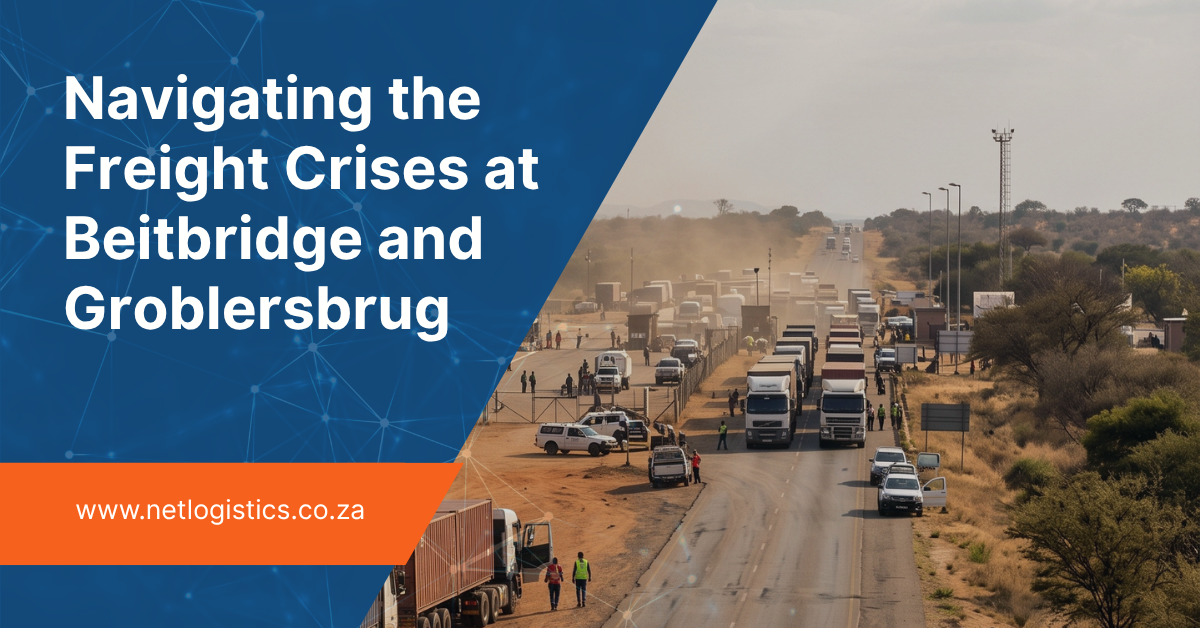
If you manage a supply chain moving goods from South Africa into the rest of the SADC region, you already know the fourth quarter is affectionately—and sometimes painfully—known as the “silly season.”
Under normal circumstances, Q4 is a high-pressure balancing act. You have retailers desperately stocking up for the December holiday rush, agricultural sectors rushing fertilizers north before the summer rains hit, and massive volumes of exports like copper, cobalt, and tobacco flowing south.
But as we move deeper into the final months of the year, “normal circumstances” no longer apply. If you’ve been relying on the old strategy of simply comparing border wait times on the fly and hoping for the best, it’s time for a hard reset. Right now, the regional freight network is experiencing simultaneous, systemic bottlenecks across its primary arteries.
For logistics managers and cargo owners, the narrative has shifted. This is no longer just about busy borders; it’s about navigating localized crises at both Beitbridge and Groblersbrug. Here is a look at what is actually happening on the ground, the hidden costs of these delays, and how NET Logistics can help you strategically reposition your freight before it’s too late.
The Silent Killer: Margin Erosion in the Queue
Before we look at the specific routes, we have to talk about the real-world impact of a truck standing still. A heavy commercial vehicle is a massive asset, and it only generates revenue when the wheels are turning.
When your cargo is forced to sit in a stationary queue for days on end, the financial bleeding begins immediately. You are dealing with crippling, unrecoverable standing costs: driver wages, vehicle financing, insurance, and the opportunity cost of lost loads. If you are moving sensitive cargo that requires specialized trailing equipment—like refrigerated tautliners for FMCG or tankers for hazardous materials—those standing costs multiply rapidly.
While we won’t get into specific Rand values (as these fluctuate wildly depending on the operator and cargo), the bottom line is that unpredictable, multi-day delays destroy the viability of just-in-time (JIT) supply chains. It leads to severe margin erosion, potential SLA penalties for late deliveries, and ultimately inflates the cost of everyday commodities in destinations like Harare and Lusaka.
Corridor 1: The Beitbridge Bottleneck
The Beitbridge border post, connecting South Africa to Zimbabwe over the Limpopo River, handles immense volumes. It is widely recognized as Southern Africa’s busiest border post, processing more than 400 heavy commercial trucks daily.
However, recent performance metrics have been alarming. Recent corridor analytics show that average crossing times for heavy motor vehicles surged to an astonishing 38 to 46 hours during volume spikes, with physical queues occasionally stretching over 20 kilometers down the N1.
What is actually going wrong?
It isn’t just about the sheer volume of trucks; it’s about institutional friction. A major catalyst for the current delays was the strict enforcement of Statutory Instrument 59 (SI 59) by the Zimbabwe Revenue Authority (ZIMRA), aimed at tightening customs compliance. While the goal is understandable, the reality on the ground is that fully compliant commercial trucks are getting caught in the crossfire, sharing congested lanes with slower-moving informal loads.
Furthermore, trucks are subjected to redundant, sequential inspections by overlapping agencies. Even when South African authorities process trucks efficiently, they often have to halt clearances entirely because the staging areas on the Zimbabwean side are physically full, resulting in a frustrating “stop-go” nightmare for drivers.
The 10-Day Danger Zone
Here is the most critical piece of intelligence for your Q4 planning: the delays at Beitbridge are not random. They follow a highly predictable, mathematically measurable cycle.
Traffic spikes massively starting around the 25th of every month and lasts until about the 5th of the following month. Why? It’s the perfect storm of corporate month-end billing cycles, salary payouts triggering retail demand, and cross-border traders rushing to clear goods.
If you dispatch a truck from Johannesburg on November 24th, you are driving your cargo straight into a brick wall.
Corridor 2: The Groblersbrug Biometric Crisis
Historically, savvy operators moving freight to Zambia bypassed the Beitbridge chaos by taking the western route through Botswana. This route eliminates the need for a costly and complex Zimbabwe transit bond and allows trucks to enter Zambia via the brilliant, 24/7 operational Kazungula One-Stop Border Post (OSBP), which can process pre-cleared trucks in just 2 to 4 hours.
It’s a fantastic route. The problem? You have to get into Botswana first.
The “Waterbed Effect” meets New Regulations
Supply chains act like a waterbed: when you push down on one side, the other side bulges. When Beitbridge congestion became unbearable, transporters fled west, pushing massive volumes of traffic toward the Groblersbrug/Martins Drift entry into Botswana.
Unfortunately, this massive diversion collided perfectly with a new, stringent biometric system rolled out by the South African Border Management Authority (BMA) in October 2024. Capturing facial and fingerprint data takes about 15 minutes per person. Because there simply isn’t enough deployed personnel or digital infrastructure to handle this influx, the corridor effectively broke.
The result has been stationary queues stretching for up to seven kilometers along the N11 highway. The situation became so dire that the Botswana Unified Revenue Service (BURS) had to publicly distance itself from the delays, clarifying that the bottleneck is entirely on the South African side of the border.
Don’t Navigate the Chaos Alone
The cascading effects of Q4 border delays transform predictable transit routes into multi-day endurance events that test the patience and budgets of everyone involved. Success in the upcoming festive season relies entirely on preemptive action, flawless documentation, and having your ear to the ground.
You need a partner who doesn’t just put your cargo on a truck, but actively manages its journey through these complex geopolitical and infrastructural hurdles.
Contact NET Logistics today to discuss your Q4 freight requirements, secure your transport capacity, and let our experts insulate your supply chain against the seasonal surge.