
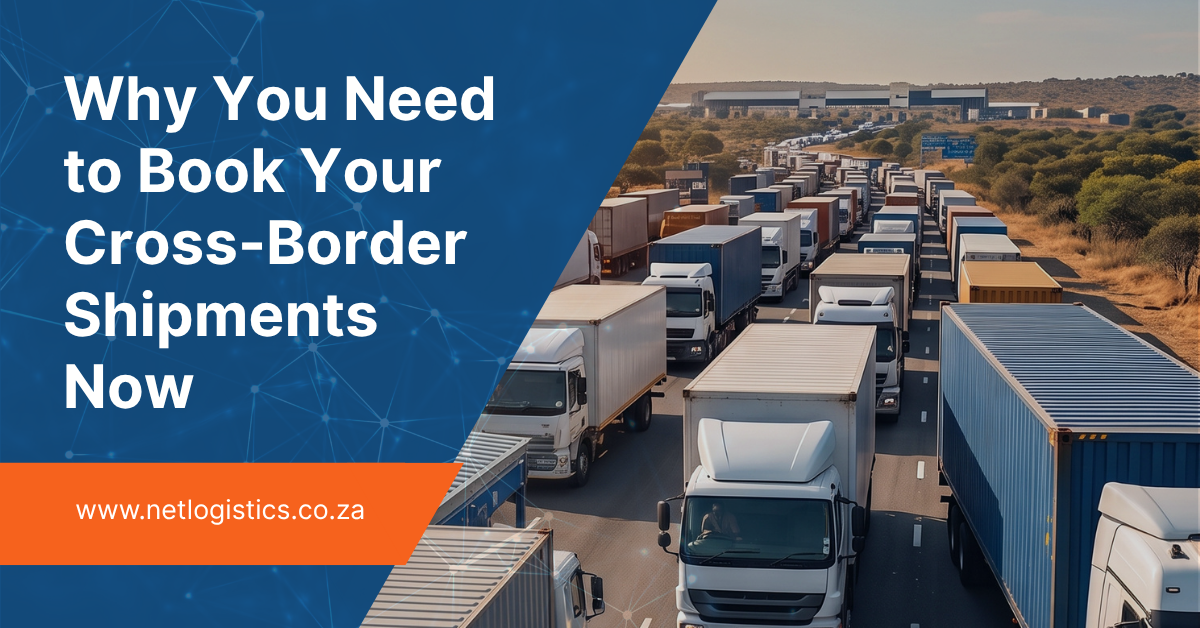
When it comes to cross-border logistics in Southern Africa, the final months of the year are not the time to leave transport planning until the last minute.
September is the ideal time for businesses to start planning their year-end shipments into Zimbabwe and Zambia. As the festive season approaches, freight volumes increase, truck capacity comes under pressure, border posts become busier, and customs or documentation delays can have a greater impact on delivery schedules.
The earlier you plan, the more options you have.
For businesses moving cargo from South Africa into Zimbabwe or Zambia, early planning can help secure transport capacity, allow sufficient time for documentation and customs processes, and reduce the risk of freight being caught in the year-end rush.
What Does Peak Season Look Like in Cross-Border Logistics?
In road freight, the end-of-year rush does not suddenly start in December.
Volumes generally begin increasing during the final months of the year as businesses prepare for year-end demand, agricultural activities increase, projects work towards annual deadlines, and companies try to move stock before holiday shutdown periods.
Several sectors can require transport capacity at the same time, including:
- FMCG and Retail: Businesses increase stock levels ahead of the festive season.
- Mining and Manufacturing: Companies work towards production, maintenance and year-end project deadlines.
- Agriculture: Seasonal demand for agricultural inputs and commodities can increase northbound freight volumes.
- Chemicals: Agricultural, mining and industrial chemical requirements continue to place demand on both hazardous and non-hazardous transport capacity.
The result is simple: more cargo is competing for available truck space.
Truck Availability During Silly Season
One of the biggest challenges during peak season is capacity.
NET Logistics operates both consolidated and dedicated road freight services from Johannesburg into Zimbabwe and Zambia.
For smaller shipments, understanding how freight consolidation works for cross-border transport allows customers to use only the space they require on a shared vehicle rather than paying for an entire dedicated truck.
However, consolidation capacity is determined by the freight booked for each departure. As year-end volumes increase, available pallet and loading space can fill more quickly.
At the same time, it is important to recognize that both consolidation and dedicated services face the exact same busy constraints during the silly season—both options get heavily utilized and equally pushed to their limits. Because available fleet capacity becomes scarce across the board, forecasting and early booking are essential regardless of whether you choose shared space or a full load.
Why September Is the Time to Start Planning
Planning in September does not necessarily mean that every shipment needs to move immediately.
It means giving your logistics team visibility of what is coming.
If you are expecting regular shipments during the final months of the year, consider providing:
- Expected collection dates
- Number of pallets or estimated loading space
- Cargo weights and dimensions
- Commodity descriptions
- Final destinations
- Expected shipment frequency
- Whether the cargo can be consolidated or requires a dedicated vehicle
- Any special handling or dangerous goods requirements
The more information available in advance, the easier it is to plan the appropriate transport solution.
Don’t Forget the Documentation
Truck capacity is only one part of successful cross-border transport.
Documentation can be just as important.
Before cargo moves, exporters and importers should ensure that the required commercial and customs documentation is correct and available within the required timeframes.
Depending on the shipment, this may include documents such as:
- Commercial invoices
- Packing lists
- Export documentation
- Import documentation
- SADC Certificates of Origin, where applicable
- Import permits or commodity-specific documentation
- Clearing instructions
- Exporter and importer registration information
- Dangerous goods documentation, where applicable
Requirements differ according to the commodity, country of origin, destination and customs procedure.
Documentation should therefore be checked before dispatch, rather than waiting until the vehicle reaches the border.
Shipping to Zambia During Peak Season
For Zambia-bound freight, early planning is particularly important.
NET Logistics operates its northbound Zambia service from Johannesburg via Groblersbrug and Kazungula, with consolidated freight moving to Lusaka and dedicated transport available for larger shipments and destinations further north.
Customers should ensure that their Zambian importer and appointed clearing agent are prepared well in advance.
Pre-clearance documentation needs to be submitted within the required timeframes, and the information supplied for customs purposes must be complete and accurate.
If you are shipping to Zambia during these months, you have to compete with massive agricultural input demand. The required shipment information may include:
- Importer TPIN
- Accurate commodity descriptions
- Quantities
- Weights
- Commercial invoice values
- Supporting import or permit documentation where applicable
The carrier, importer, exporter and clearing agent all play different roles in the cross-border process. Early communication between all parties is therefore essential.
Incomplete or late documentation can delay a vehicle even when transport capacity has been secured.
Shipping to Zimbabwe During Peak Season
Zimbabwe-bound shipments require the same level of forward planning.
NET Logistics operates consolidated and dedicated services from Johannesburg to Zimbabwe, including Harare and Bulawayo.
Depending on the commodity and shipment, additional requirements such as conformity assessment, permits, certificates of origin or other customs documentation may apply.
Exporters should also ensure that the necessary South African export requirements are in place before dispatch.
During busy periods, customs and border processing times can fluctuate considerably. Recent transport corridor data shows average crossing times at Beitbridge nearing four days during heavy volume spikes, alongside unprecedented truck congestion at Kazungula due to new rules. Documentation should therefore be prepared as early as possible to minimise avoidable delays.
By submitting documents early through official channels—such as ensuring your original documents and electronic declarations are loaded onto the Zambia Revenue Authority (ZRA) ASYCUDA system or corresponding customs portals the moment goods are dispatched—clearing agents can process your cargo efficiently.
Consolidation vs Dedicated Transport
Choosing the right transport option depends on the size, urgency and nature of your shipment.
| Feature | Consolidation | Dedicated Transport |
| Best suited to | Smaller shipments and palletised cargo | Larger shipments, full loads or time-sensitive cargo |
| How it works | Your cargo shares vehicle capacity with other customers | The vehicle is allocated to your shipment |
| Cost structure | You pay according to the space/cargo being transported | You pay for the dedicated vehicle |
| Planning | Departure depends on consolidation build-up and available capacity | Can offer greater control over loading and dispatch planning |
| Peak season consideration | Space can fill more quickly as volumes increase | Vehicle availability can also become constrained during busy periods |
Neither option is automatically better.
The right choice depends on your cargo, required delivery timeframe and budget.
Border Delays: Plan for the Unexpected
Even when everything has been planned correctly, cross-border road freight remains dependent on factors outside the transporter’s direct control.
These can include:
- Increased traffic volumes
- Border congestion
- Customs inspections
- System interruptions
- Document verification
- Import permits
- Clearing delays
- Customs queries
- Public holidays and reduced operating hours
For this reason, transit times during peak periods should always be treated as estimates rather than guarantees.
If your cargo must arrive before a specific production deadline, shutdown period or customer delivery date, build additional contingency time into your supply chain. For more background on managing transit bottlenecks, check out these insights on common shipping delays and how to avoid them.
Common Year-End Logistics Mistakes
Some of the most avoidable year-end transport problems start long before the truck reaches the border.
Common mistakes include:
- Waiting until the last minute to request transport
- Not providing expected shipment volumes in advance
- Assuming consolidation space will always be immediately available
- Sending incomplete or incorrect customs documentation
- Waiting until dispatch to start import clearance preparations
- Failing to check whether permits or certificates are required
- Planning delivery dates around normal transit times during peak season
- Not allowing for public holidays, shutdown periods and increased border volumes
The best defence against these problems is simple: plan early and communicate early.
NET Logistics: Cross-Border Transport into Zimbabwe and Zambia
NET Logistics specialises in cross-border road freight from Johannesburg into Zimbabwe and Zambia, servicing customers across the agricultural, mining, chemical, FMCG and manufacturing sectors.
Our services include:
- Consolidated road freight
- Dedicated full loads
- Hazardous and non-hazardous cargo
- Cross-border transport planning
- Export documentation support
- Shipment tracking and communication
- Coordination with customers and appointed clearing agents
Our team works closely with customers before dispatch to ensure that transport requirements are understood, documentation is prepared as early as possible, and shipments are planned around available capacity.
We also provide regular tracking communication while cargo is in transit, helping customers maintain visibility throughout the journey.
Planning Year-End Freight? Start Now.
If you expect to move cargo from South Africa into Zimbabwe or Zambia during the final months of the year, now is the time to start the conversation.
You do not need to wait until every order is finalised.
Give us your estimated volumes, expected collection dates and destinations so that we can help you plan ahead.
Planning early gives you more options. Waiting until the last minute gives you fewer.
Ready to Plan Your Year-End Shipments?
Send NET Logistics your:
- Collection point
- Final destination
- Commodity
- Number of pallets or packages
- Weights and dimensions
- Cargo value
- Expected collection date
- Dangerous goods classification, where applicable
Our team can then assess the most suitable transport option for your shipment.
Contact NET Logistics For a Quote
NET Logistics – Cross-Border. Sorted.